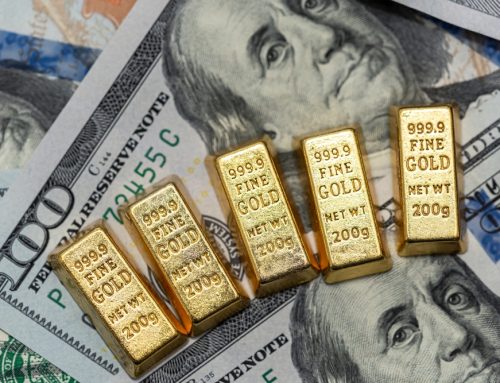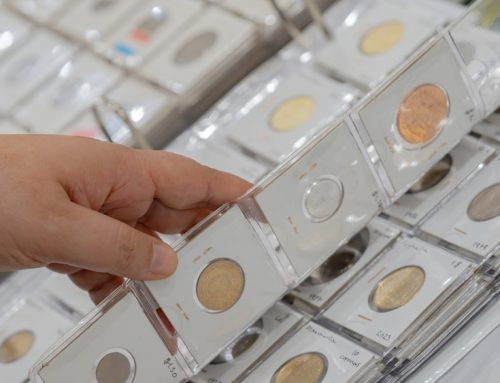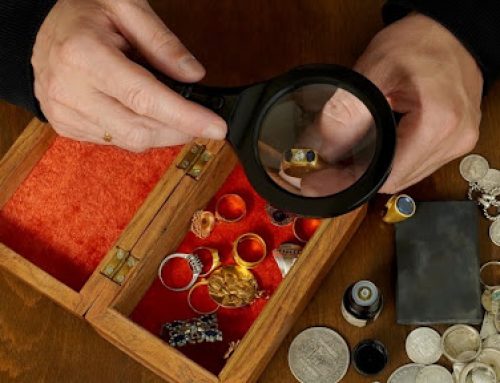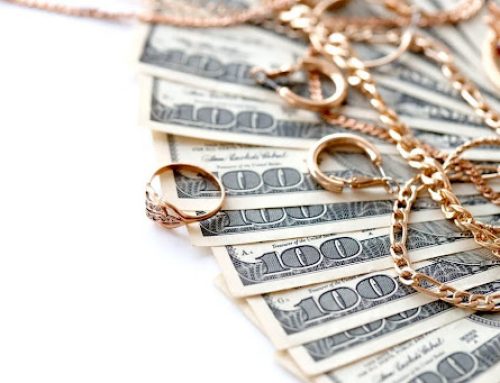
If you’ve looked into selling gold recently, you’ve probably run into two very different numbers. One is the “spot price” quoted on financial news sites or precious-metals trackers. The other is whatever a buyer actually offers you for your ring, your chain, or your coin collection. Those two numbers are almost never the same, and if nobody explains why, it’s easy to assume you’re being shortchanged. In this article, we’ll outline what spot pricing and melt value are, how the market can move gold prices, and what an offer could actually look like from a trusted gold buyer.
What Is the Spot Price of Gold and Where Does It Come From?
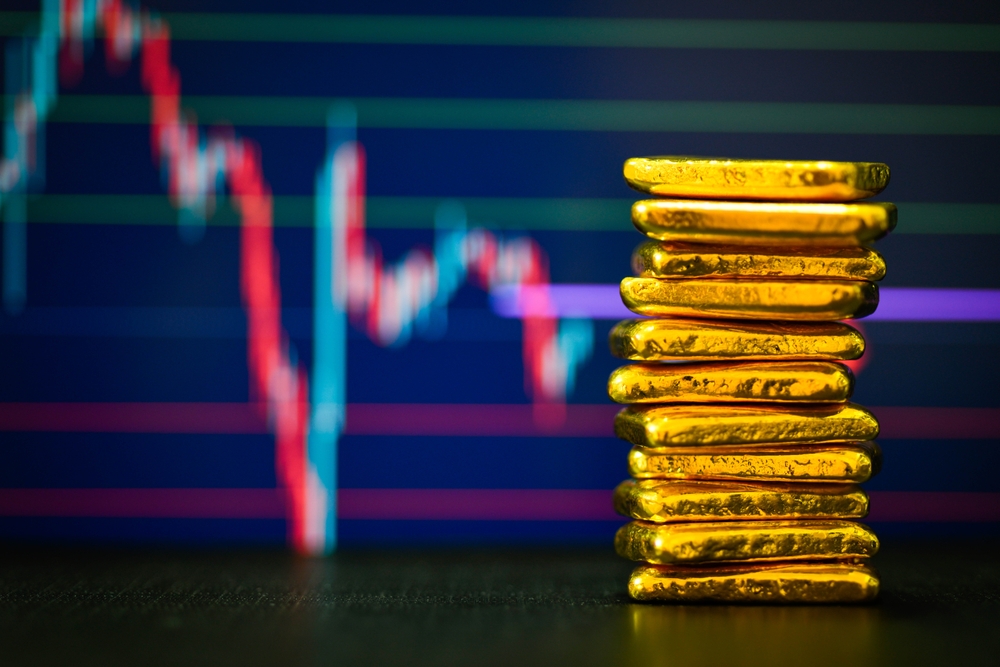
Spot price is the current wholesale market value of pure gold, quoted per troy ounce (about 31.1 grams). It isn’t set by any single company, and it definitely isn’t set by the buyer sitting across the counter from you. It comes from two sources: the London Bullion Market Association runs an electronic benchmark auction twice a day, and that auction produces the reference price used in wholesale trading worldwide. Layered on top of that, gold futures traded on COMEX react to economic news, currency moves, and investor activity in real time, which is why the number on a live tracker can shift by the minute during trading hours.
That’s also why the spot price you see quoted is public information. Anyone can look it up on a financial site or a precious-metals tracker before ever walking into a store. A reputable buyer isn’t hiding that number from you. They’re applying it to your specific items, which is a separate calculation covered below, and knowing where that starting number comes from is the first thing that lets you tell a real explanation apart from a made-up one.
What Is Melt Value and How Is It Calculated?
Melt value is what a specific item is worth based purely on the pure gold it contains, calculated from three inputs: weight, purity, and the current spot price. The formula is straightforward:
Weight × Purity Percentage × Spot Price Per Gram = Melt Value
Here’s what that looks like with a hypothetical example (the price below is illustrative only, not a current market quote):
| Item | Weight | Purity | Example Price/Gram | Melt Value |
|---|---|---|---|---|
| 14K gold ring | 5 grams | 58.3% (14K) | $70/gram | 5 × 0.583 × $70 = $204.05 |
Change any one of those three inputs, and the number moves. A heavier item with the same purity is worth more. The same weight at a higher purity is worth more. And melt value rises and falls with spot price throughout the day, which is part of why two visits on two different days can produce two different numbers for the exact same item.
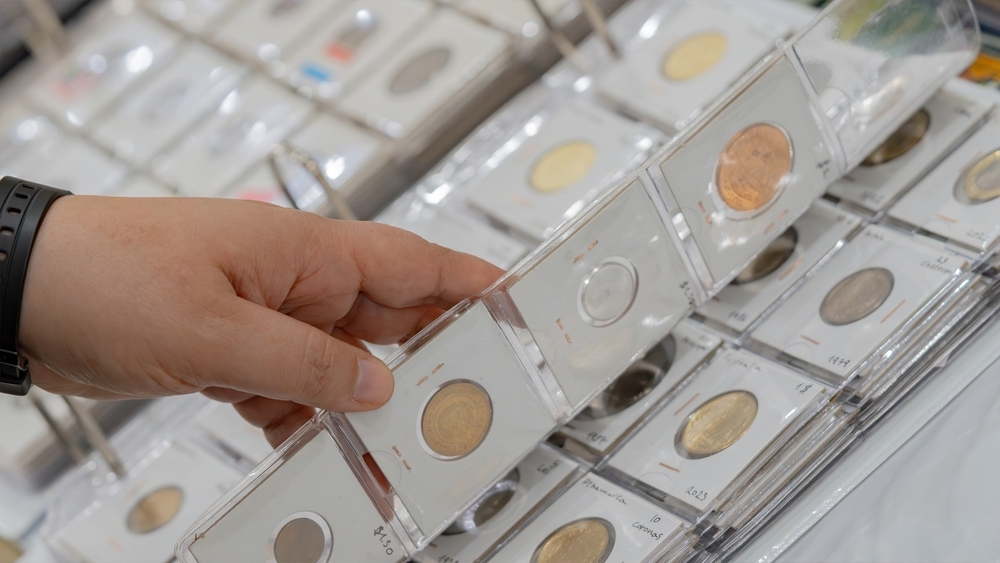
Melt value isn’t the maximum amount that all items can reach as well. In some cases, jewelry and coins have a value greater than their pure gold content due to their rarity, the quality of craftsmanship, or collector interest. The guide on how to sell inherited gold and silver explains how scrap value, bullion value, and collector value are separated out rather than being priced in the same way, something that is most important when dealing with older or inherited pieces since the design or the maker can be worth more than the metal itself.
How Karat Purity Affects What You Get Paid for Gold
Karat purity tells you what percentage of an item is actually gold, and it’s doing most of the work in the melt-value formula above. Jewelry is almost never sold as pure 24K gold because pure gold is too soft for daily wear, so manufacturers mix it with other metals to make it more durable.
| Karat | % Pure Gold | What This Means |
|---|---|---|
| 10K | 41.7% | Most durable and most affordable to produce; common in everyday, budget jewelry |
| 14K | 58.3% | The most common purity in US-sold jewelry; balances durability with gold content |
| 18K | 75% | Softer but higher gold content; common in fine and designer jewelry |
| 22K | 91.6% | High purity, less common in Western jewelry; more typical in coins and some cultural jewelry |
| 24K | 99.9% | Pure gold; the standard for bullion bars and many coins, is rarely used in wearable jewelry |
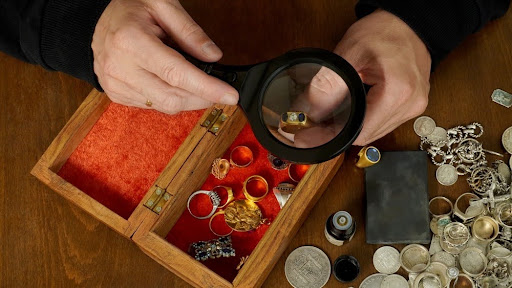
Two rings that look identical can be worth meaningfully different amounts if one is 10K and the other is 18K, even if they are the same weight. If your piece doesn’t have a visible karat stamp, or the stamp is worn away, a reputable buyer will test it rather than guess.
Why Spot Price and Your Offer Price Are Not the Same
Melt value, calculated the way it’s laid out above, is the theoretical maximum for an item’s raw metal content at that exact moment. Your actual offer is built from that number, then adjusted for the real costs of doing business: refining and processing, testing equipment and labor, and the margin a buyer needs to keep operating. None of that is unique to any one buyer. It’s how the transaction works everywhere gold changes hands for cash, whether that’s a dedicated buyer, a pawn shop, or an online mail-in service.
What does vary is how much of that gap gets passed on to you. A buyer running high-volume foot traffic through a busy storefront carries different overhead than one built around private, one-on-one appointments. That’s exactly where buyer business models diverge, and it’s why appointment evaluations tend to close that gap further than high-volume setups do. If a piece also carries resale or collector value beyond its melt value, that can push an offer above the basic scrap calculation rather than below it.
How Market Forces (Inflation, Dollar, Demand) Move Gold Prices
Spot price itself isn’t fixed from one day to the next, and a handful of broader forces explain most of the movement. Gold is priced globally in US dollars, which creates an inverse relationship: when the dollar strengthens, gold tends to become more expensive for overseas buyers, and demand softens; when the dollar weakens, the opposite tends to happen. Interest rates play into this too: gold pays no yield on its own, so when interest rates rise and dollar-denominated assets offer better returns, some of gold’s appeal fades. When rates are expected to fall, that dynamic tends to reverse.
Inflation works differently. Gold has long functioned as a hedge against it, so when inflation expectations rise, particularly alongside falling real yields, investor demand for gold often increases. Central banks add another layer: many have been steadily diversifying their reserves into gold rather than holding primarily dollars and Treasuries, thereby supporting demand independent of short-term currency swings.
Demand itself isn’t one single thing, either. Jewelry manufacturers buying raw gold, investors buying coins and bars, and central banks building reserves are all pulling from the same global supply at the same time, and they don’t always move together. Heavy jewelry demand in a strong economy can push prices up on its own, while a rush toward gold as a safe haven during economic or political uncertainty can do the same thing for entirely different reasons. That’s part of why spot price can move even when nothing about the physical supply of gold has changed at all.
None of this is something The Gold Rush Store or any single buyer controls. It’s also why the spot price you check today may not match what you saw last week, and why timing can genuinely affect what an item is worth from one visit to the next.
How to Use Spot Price to Evaluate Any Gold Buyer’s Offer
Everything above adds up to a checklist you can actually use, whether you’re selling to us or comparing offers elsewhere:
- Check today’s spot price yourself first. It’s public data, available through sites like Kitco or the World Gold Council, before you ever walk in. Write it down or keep the page open.
- Ask what karat purity your item tested at, and ask to see how it was tested rather than taking a number on faith. A stamp on the piece is a starting point, not proof.
- Ask for the exact weight in grams. A buyer should be willing to show you the scale and let you watch each item be weighed individually rather than tossed together.
- Run the melt-value math yourself: weight × purity percentage × today’s spot price per gram. Compare that number to what you’re being offered before you say yes.
- Ask the buyer to explain the difference between the melt value and their offer. A reputable buyer can walk you through refining costs, overhead, and margin without being vague or defensive.
- Get more than one number if you’re unsure. Comparing offers costs you a few extra minutes and nothing else, and it’s the fastest way to tell whether a number is fair.
None of this requires special training. It’s the same math covered above, applied at the counter instead of on paper. If you haven’t sold gold before, our full guide to selling gold jewelry in Nashville walks you through what to expect from the visit, start to finish.
Frequently Asked Questions
Does the spot price change during the day, and does that affect my offer?
Yes. The spot price moves continuously during trading hours in response to futures activity and market conditions. A reputable buyer calculates your offer using the price on the day of your appointment, not a number from days earlier.
Is a higher spot price always better for me as a seller?
Generally, yes, since melt value scales directly with spot price. But a high spot price doesn’t guarantee a high offer on its own. The karat purity and weight of your specific items still drive the final number.
Can I check the spot price myself before I go to a buyer?
Yes. Spot price is public data pulled from the same wholesale markets every buyer uses. It isn’t something any single gold buyer sets or controls, including us.
Does melt value apply the same way to coins and bullion as it does to jewelry?
Mostly, yes, for standard bullion and common coins. The same weight-times-purity math applies. Rare or collectible coins can be worth more than their melt value due to numismatic demand, a separate evaluation from scrap pricing.
Why do different gold buyers offer different amounts for the same item?
Overhead, testing methods, and how a buyer’s business model handles resale opportunities all vary. That’s exactly why comparing more than one offer, using the math above, is worth the extra few minutes.
Ready to Get an Offer You Can Actually Check?
Selling gold shouldn’t require guesswork. At The Gold Rush Store, every evaluation is done in a visit where you can see how your items are tested, weighed, and priced against the current spot price.
Call (615) 893-2414 or visit our Smyrna location to find out what your gold, silver, or coins are actually worth today.