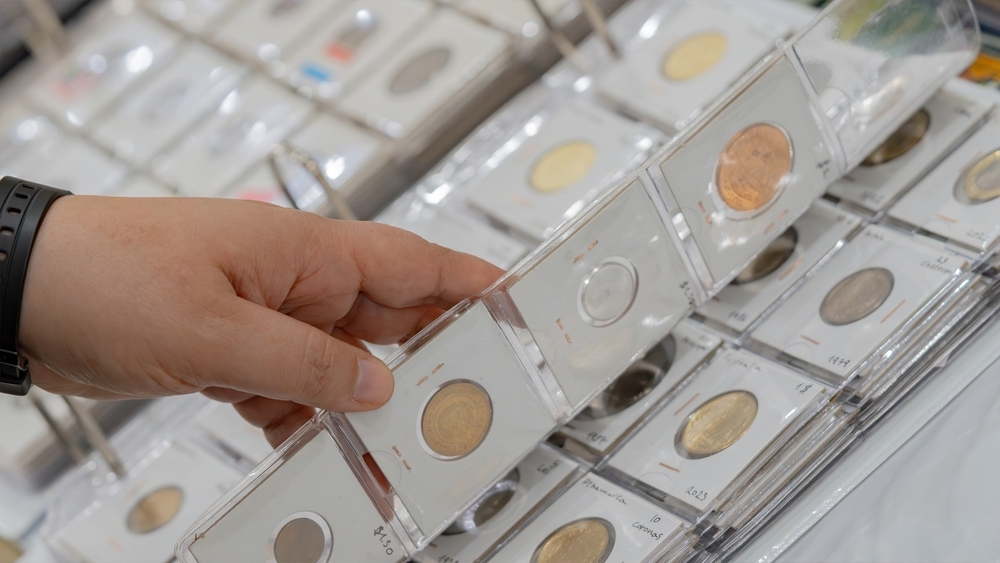
A shoebox of old coins, a jar from a relative’s dresser, a few “special” pieces set aside years ago and forgotten. Most people who bring coins like these into a coin buyer in Nashville or Smyrna have no idea what they’re actually holding, and that’s normal. Some of what’s in there is straight bullion, worth roughly its metal content. Some of it might be worth ten or twenty times that. The difference comes down to a handful of details most sellers have never had a reason to learn, and knowing them before you sell can change what you walk out with.
Here’s what this guide covers, from what actually makes a coin worth more than its melt price to what happens the moment it crosses the counter:
In This Article
- Numismatic Value vs. Bullion Value: What’s the Difference?
- What Makes a Gold Coin Worth More Than Its Metal Weight?
- Common Gold Coins Local Dealers Buy: Eagles, Krugerrands, and Pandas
- How Coin Condition and Grading Affect Your Offer
- Should You Clean Your Coins Before Selling? (Short Answer: No)
- What to Expect During a Coin Appraisal From a Local Gold Buyer
- Frequently Asked Questions
Numismatic Value vs. Bullion Value: What’s the Difference?
Every gold or silver coin has two possible sources of value, and they don’t always agree with each other.
Bullion value is what a coin is worth purely for the metal it contains. A one-ounce gold coin, melted down, is worth roughly whatever one ounce of gold is trading for that day.
Numismatic value is what collectors will pay above the metal content because the coin is rare, historically significant, or unusually well-preserved. A worn 1922 penny might be worth a few cents in metal. A well-preserved 1922 penny missing its mint mark can be worth hundreds of dollars, because so few were struck that way.
The distinction changes how a coin gets evaluated. A coin bought purely for bullion is weighed and priced against the day’s market. A coin with numismatic potential gets examined for date, mint mark, and condition first, because that’s where the real value might be hiding. A 1927-D Saint-Gaudens double eagle is a good example: most sellers have never heard of it, yet it’s one of the most valuable U.S. gold coins in existence, largely because so few survived a Depression-era recall. Our Rare Coin Guide walks through the specific dates and mint marks that tend to carry collector premiums if you want to check your own coins before selling.
What Makes a Gold Coin Worth More Than Its Metal Weight?
Four things push a coin’s value above its melt price: authenticity, rarity, condition, and demand.
Authenticity comes first, before any of the others matter. A coin has to be confirmed genuine before rarity or condition mean anything, since a well-made counterfeit or replica has none of the value its date and mint mark would otherwise suggest. This is one of the first things checked in any appraisal, not an afterthought.
Rarity comes down to how many of a coin were struck, and how many survived. Mint marks (the small letters S, D, O, or CC stamped near the date) tell you which facility struck it, and some mints simply produced far fewer coins in a given year. The same date and design can be common from one mint and scarce from another.
Condition compounds rarity: a rare date in heavily worn shape is worth far less than the same date with sharp detail and strong luster intact. That’s graded on a numeric scale, covered below.
Demand is the least predictable factor, and the one dealers track closest. Collector interest shifts. A series quietly ignored a decade ago can become sought-after as collecting trends change, which is exactly why a professional look matters before a coin gets sold for scrap. Mint errors, like a double-struck design or a coin stamped off-center, are a separate category entirely, and even a common-date coin can carry a real premium when an error is present.
Common Gold Coins Local Dealers Buy: Eagles, Krugerrands, and Pandas
Most of what dealers buy in Nashville and Smyrna is modern bullion, purchased as an investment rather than for collecting.
| Coins | Purity | Notes |
| American Gold Eagle | 91.6% (22K), copper-alloyed | Contains a guaranteed full troy ounce of gold (or stated fraction) despite the alloy |
| South African Krugerrand | 91.6% (22K), copper-alloyed | Same purity and gold-content guarantee as the Eagle; one of the original modern bullion coins |
| Chinese Gold Panda | .999 fine (24K) | Design changes yearly, giving some older issues a collector following beyond metal value |
The alloy in Eagles and Krugerrands surprises people who assume every gold coin is 24-karat. It’s there for durability, not to shortchange the gold content.
All three trade close to spot price when they’re common, recent-year issues in good condition. Older or lower-mintage years, or exceptional condition, can pull a small premium above that. Common bullion coins in typical condition usually sell within a percent or two of the day’s spot price, which is why the date on the calendar matters as much as the date on the coin. Foreign and world coins, from British Sovereigns to older European gold, are evaluated the same way: melt value first, collector potential second. If you’re not sure which category your coins fall into, our coins page breaks down the full range of gold, silver, and foreign coins we evaluate.
Should You Clean Your Coins Before Selling? (Short Answer: No)
Condition affects bullion and numismatic coins differently, and it’s worth knowing which situation you’re in.
For a bullion coin like an Eagle or Krugerrand, condition rarely moves the price. A scuffed one-ounce coin still contains the same ounce of gold as a pristine one.
For a coin with numismatic potential, condition is often the whole story. Professional grading services (PCGS and NGC are the two most widely recognized) assign a numeric grade on a 70-point scale. A coin graded MS-65 (uncirculated, sharp detail) can be worth many times more than the identical date and mint mark graded VG-8 (heavily worn). A dealer examining an ungraded coin is essentially estimating where it would land on that scale, looking at luster, strike sharpness, and how much detail remains on the highest points of the design. A coin already certified in a PCGS or NGC holder typically sells with more certainty than a raw coin of the same date, since the grade has already been independently confirmed.
Should You Clean Your Coins Before Selling? (Short Answer: No)
It’s tempting. A coin that’s been sitting in a drawer for decades often looks dull, and polishing it seems like it should help.
It doesn’t. Cleaning or polishing removes the coin’s original surface, and that surface is exactly what a grader assesses. A cleaned coin typically grades lower than the same coin left alone, even if it looks shinier. Collectors and grading services can usually tell natural toning apart from an altered surface, and it works against you every time.
If a coin looks dirty or tarnished, bring it in exactly as you found it.
What to Expect During a Coin Appraisal From a Local Gold Buyer
The process itself typically runs in four steps:
- Bring ID. As a registered Tennessee precious metals dealer, we ask for a valid, government-issued ID, such as a driver’s license, state ID, passport, or military ID, on every purchase, coins included, as standard practice.
- Your coins get sorted, separated by bullion versus numismatic potential, then by metal and purity.
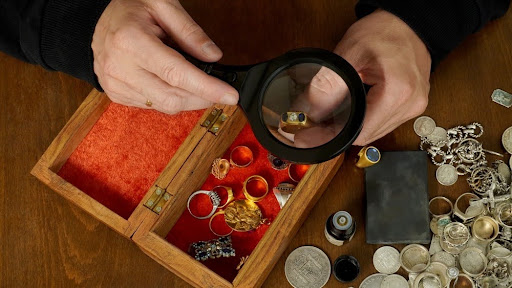
- Each coin gets examined individually. Bullion coins are weighed and tested for authenticity, then priced against spot. Coins with numismatic potential get checked for authenticity, date, mint mark, and condition, with the dealer explaining what they’re seeing as they go. Most appraisals take just a few minutes, though larger collections may take longer.
- You’ll get an offer the same day, with a clear breakdown of what’s bullion, what carries additional value, and why, plus same-day payment if you accept.
Two things worth confirming before you sell, regardless of where you go:
- Credentials. Dealers affiliated with PCGS, NGC, or similar organizations have a stake in getting grading and pricing right, and it’s a fair question to ask before you commit. If a buyer rushes the process or pressures you to decide on the spot, that’s a signal to slow down.
- In-person over mail-in, especially for anything potentially rare. Mailing means losing the chance to watch the process, ask questions in real time, or get a second opinion before deciding, and it adds shipping risk for coins that may be worth far more than their insured value covers. An in-person appraisal in Smyrna or Nashville lets you see exactly how your coins are handled and priced, with no shipping risk in between.
This applies whether you’ve brought in a handful of coins or an inherited collection you’re still sorting out; our Estate Guide covers what to expect with an inherited collection for the first time.
If you’re ready to find out what your coins are actually worth, bring them in for a free appraisal at The Gold Rush Store in Smyrna, or reach out to schedule an appointment. Walk-ins are welcome Monday through Friday, 10 AM to 5 PM, and Saturday, 11 AM to 3 PM. There’s no pressure and no charge to find out what you have.
Frequently Asked Questions
Do I need an appointment to sell gold coins in Nashville or Smyrna? Walk-ins are welcome, though scheduling ahead means less waiting and a dedicated appraisal window rather than being worked in between other customers.
How much are my gold coins worth right now? Bullion coins track the day’s spot price closely. Numismatic coins depend on date, mint mark, and condition, which is why an in-person look matters more than a quick online estimate based on weight alone.
Can I sell inherited coins without paperwork or documentation? Yes. Documentation can help establish a collection’s history, but it isn’t required to get an accurate appraisal and offer on the coins themselves.
Do you buy silver coins too? Yes, along with junk silver, foreign coins, and other collectibles beyond gold. The same sorting and evaluation process applies regardless of metal.

Leave A Comment